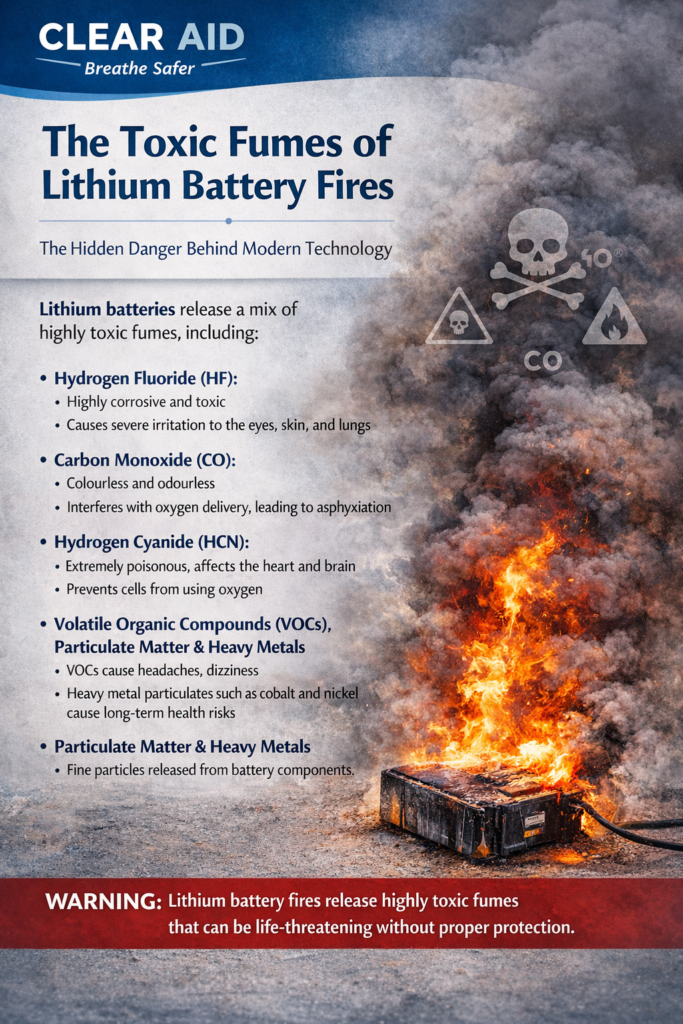

The Toxic Fumes of Lithium Battery Fires
The Hidden Danger Behind Modern Technology
Lithium-ion batteries power much of our daily lives—from mobile phones and laptops to e-bikes and power tools. However, when these batteries fail or become damaged, they can enter a process known as thermal runaway, leading to intense fires and the rapid release of highly toxic fumes.
Understanding the composition of these fumes—and their dangers—is critical for both fire safety professionals and the general public.
What Toxic Fumes Are Released?
When a lithium-ion battery burns, it produces a complex and hazardous mix of gases and airborne particles. Key toxic substances include:
Hydrogen Fluoride (HF)
One of the most dangerous gases released.
- Highly corrosive and toxic
- Causes severe irritation to the eyes, skin, and respiratory system
- Can penetrate deep into lung tissue and lead to long-term damage
Carbon Monoxide (CO)
A common product of incomplete combustion.
- Colourless and odourless
- Prevents oxygen from being carried in the bloodstream
- Can quickly lead to unconsciousness and death in enclosed spaces
Hydrogen Cyanide (HCN)
Extremely toxic and fast-acting.
- Interferes with the body’s ability to use oxygen at a cellular level
- Affects the heart and brain
- Even small exposures can be life-threatening
Volatile Organic Compounds (VOCs)
Including solvents and electrolyte vapours.
- Can cause dizziness, headaches, and irritation
- Some are flammable and contribute to fire spread
Particulate Matter & Heavy Metals
Fine particles released from battery components.
- Can be inhaled deep into the lungs
- May contain metals such as cobalt, nickel, and manganese
- Associated with long-term health risks, including respiratory disease
Why Lithium Battery Fires Are Especially Dangerous
Unlike conventional fires, lithium battery fires:
- Develop rapidly with little warning
- Produce dense, toxic smoke in seconds
- Can reignite even after appearing extinguished
- Release gases under pressure, increasing the risk of explosion
In enclosed environments, smoke can fill a room in under a minute—creating a life-threatening atmosphere before occupants have time to react.
Health Risks of Exposure
Exposure to lithium battery fire fumes can result in:
- Respiratory distress – coughing, shortness of breath, lung injury
- Eye and skin irritation – burning sensations and chemical burns
- Neurological effects – dizziness, confusion, headaches
- Loss of consciousness – particularly due to carbon monoxide and hydrogen cyanide
- Long-term health complications from toxic particulates and chemical exposure
Safety Advice
- Evacuate immediately if a lithium battery fire is suspected
- Avoid inhaling smoke under any circumstances
- Do not attempt to tackle large battery fires without proper training and equipment
- Ensure working smoke detection is installed in homes and workplaces
- Store and charge batteries safely, away from flammable materials
Clear Aid Recommendation
Lithium battery fires are not just a fire risk—they are a toxic gas incident.
Proper training, awareness, and emergency planning are essential to reduce the risk of serious injury or fatality. Whether in the workplace or at home, understanding these dangers can save lives.